Perishable Solutions
Perishable Solutions
Perishable Solutions
Perishable Solutions
Cold Chain Management
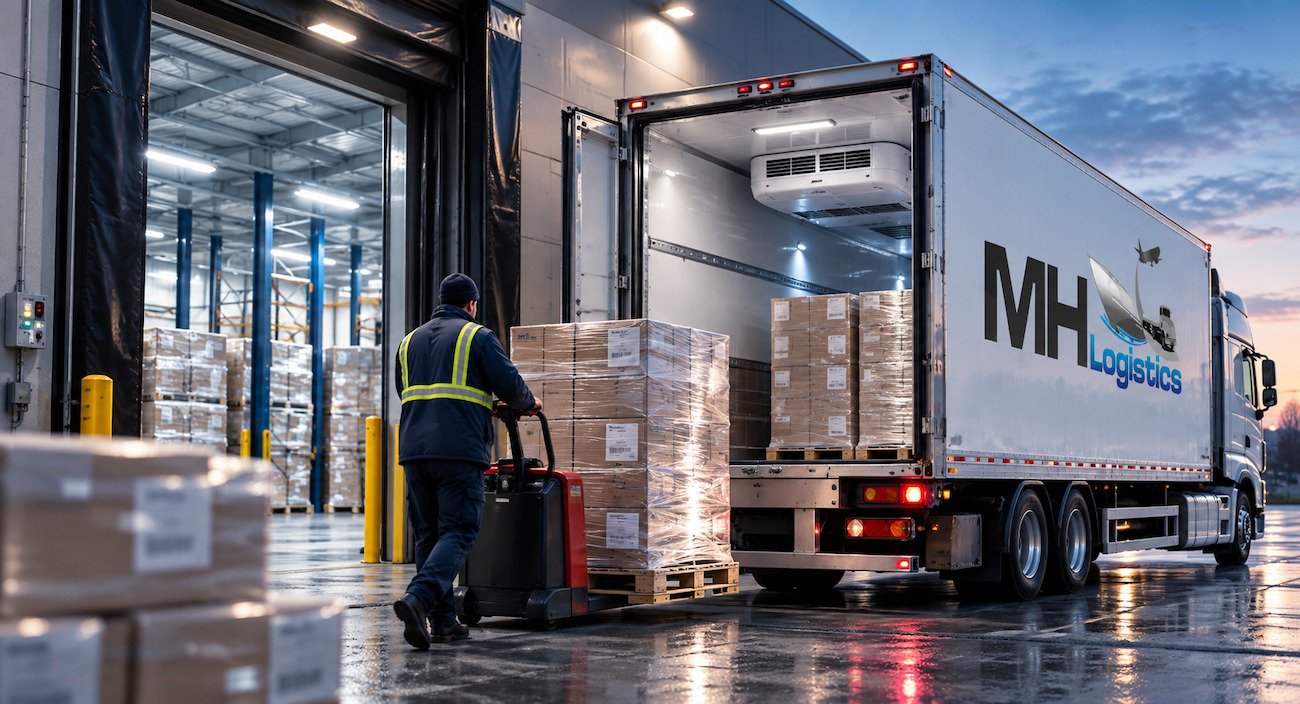


Cold chain distribution for pharmaceuticals is under more pressure than ever as the global supply chain faces unprecedented demands.
As biologics and advanced therapies take center stage, the margin for error in medical logistics has shrunk to zero.
Successful distribution is no longer just about moving freight from point A to point B; it is about maintaining a continuous, uninterrupted climate-controlled environment.
In this post, we'll cover why temperature integrity matters, the biggest challenges companies face, and the components of a successful cold chain strategy. We'll also explain how MH Logistics supports pharmaceutical organizations.
A wide range of pharmaceutical products require controlled-temperature handling.
Some products must remain refrigerated between 2°C and 8°C, while others require frozen or ultra-low temperature environments.
Common cold chain pharmaceutical products include:
Many of these products contain active ingredients that can degrade when exposed to temperatures outside approved ranges.
In some cases, temperature damage is not visible through packaging inspections alone, making proper monitoring and documentation essential throughout the distribution process.
Also Read: Floral Logistics Miami FL
Cold chain integrity is the foundation of pharmaceutical logistics. Maintaining required temperatures protects product efficacy, patient safety, and regulatory compliance.
When temperature-sensitive products are exposed to conditions outside their validated ranges, manufacturers may be forced to quarantine or destroy entire shipments. The direct cost of product replacement can be substantial, but the indirect costs often create even greater disruption.
Delayed treatments, inventory shortages, customer dissatisfaction, and regulatory scrutiny can all result from a failed cold chain.
Regulatory agencies and good distribution practice standards place significant emphasis on maintaining product quality throughout distribution. Organizations operating within pharmaceutical supply chains are expected to follow documented handling procedures and maintain records demonstrating that products remained within specified conditions during transportation and storage.
Every transfer point, storage facility, transportation leg, and customs clearance event represents a potential vulnerability that must be controlled through planning, monitoring, and execution.
Pharmaceutical cold chain operations involve multiple stakeholders, transportation providers, facilities, and regulatory requirements. Each handoff introduces potential risk.
Some of the most common challenges we see are:
International shipments can be particularly challenging because products may pass through multiple airports, ports, warehouses, and regulatory jurisdictions before reaching their destination.
Also Read: Transporting Flowers From Farm To Retail
Without proper coordination, even a minor delay can impact temperature integrity.
Successful pharmaceutical cold chain distribution requires a coordinated system of facilities, packaging, technology, transportation resources, and operational controls.
Let us explain:
Temperature-controlled warehousing serves as a critical control point within pharmaceutical distribution networks.
Facilities handling pharmaceutical cargo should maintain validated environmental conditions supported by monitoring systems, backup power capabilities, and documented operating procedures.
Warehouses must be designed to minimize temperature fluctuations during receiving, storage, and shipping activities. Continuous monitoring systems provide real-time visibility into storage conditions and create audit trails that support compliance requirements.
Inventory management processes are equally important.
Products should be stored according to established handling protocols, with inventory controls that support DSCSA traceability requirements and reduce unnecessary product movement.
Packaging is often the first line of defense against temperature excursions during transportation.
Pharmaceutical shipments may utilize insulated containers, gel packs, phase-change materials, dry ice systems, or specialized thermal packaging configurations depending on product requirements, transit duration, environmental conditions, and transportation mode.
Validated packaging systems are tested under controlled conditions to verify their ability to maintain required temperatures throughout expected shipping scenarios.
Also Read: 3PL Perishable Goods
This validation process helps reduce risk and supports regulatory compliance efforts.
Selecting packaging based solely on cost can create significant exposure. Effective pharmaceutical cold chains prioritize performance and documented validation over short-term savings.
Modern cold chain operations depend heavily on visibility.
Temperature monitoring devices, data loggers, GPS tracking systems, and exception management platforms provide real-time insight into shipment status throughout transit.
These technologies allow logistics teams to identify developing issues before they become product-loss events.
Real-time monitoring supports proactive decision-making.
If a shipment experiences delays or environmental concerns, corrective actions can be implemented quickly to protect product integrity.
Detailed monitoring records also provide valuable documentation for quality assurance programs, audits, investigations, and regulatory reviews.
Even the best packaging and warehousing strategies can fail without reliable transportation execution.
Qualified transportation networks include carriers, facilities, and logistics providers experienced in handling regulated and temperature-sensitive cargo.
Drivers, warehouse personnel, and operational teams should understand the unique requirements associated with pharmaceutical products.
Transportation planning should include route optimization, contingency planning, carrier qualification procedures, and communication protocols designed to minimize risk throughout transit.
Managing pharmaceutical cold chains internally can require substantial investments in infrastructure, technology, staffing, and compliance management.
Third-party logistics providers help pharmaceutical companies scale operations while maintaining control over critical distribution requirements.
Experienced 3PLs coordinate transportation providers, storage facilities, customs processes, shipment monitoring, and reporting activities across complex supply chains.
Also Read: What To Expect From Full-Service Logistics Providers
A qualified logistics partner can also improve flexibility.
As pharmaceutical companies enter new markets, launch products, or respond to changing demand patterns, established logistics networks provide access to resources that would otherwise take years to develop internally.
For international pharmaceutical movements, customs expertise becomes particularly valuable.
Delays at borders can significantly increase cold chain risk, making customs coordination a key component of successful distribution strategies.
MH Logistics supports pharmaceutical supply chains through coordinated logistics solutions designed for regulated and temperature-sensitive cargo.
MH Logistics is a licensed customs broker and cold chain logistics coordinator, helping pharmaceutical organizations with complex transportation and compliance requirements associated with international and domestic distribution.
Our team works closely with qualified carriers, temperature-controlled facilities, and supply chain stakeholders to support product integrity throughout the distribution process.
Here’s why so many companies trust us:
By coordinating each stage of the shipment journey, MH Logistics helps reduce operational complexity while supporting compliance objectives and temperature integrity requirements.
If you are moving pharmaceuticals, you need a partner who treats the cold chain and compliance work as seriously as you do.
With temperature-controlled warehouses in New Jersey, Georgia, California, and Florida, plus over 15 years handling regulated and perishable freight, we keep your products and lanes protected from origin to final delivery.
Call us at 908-895-8605 or reach out through our contact page, and our team will help map out what your shipments need.