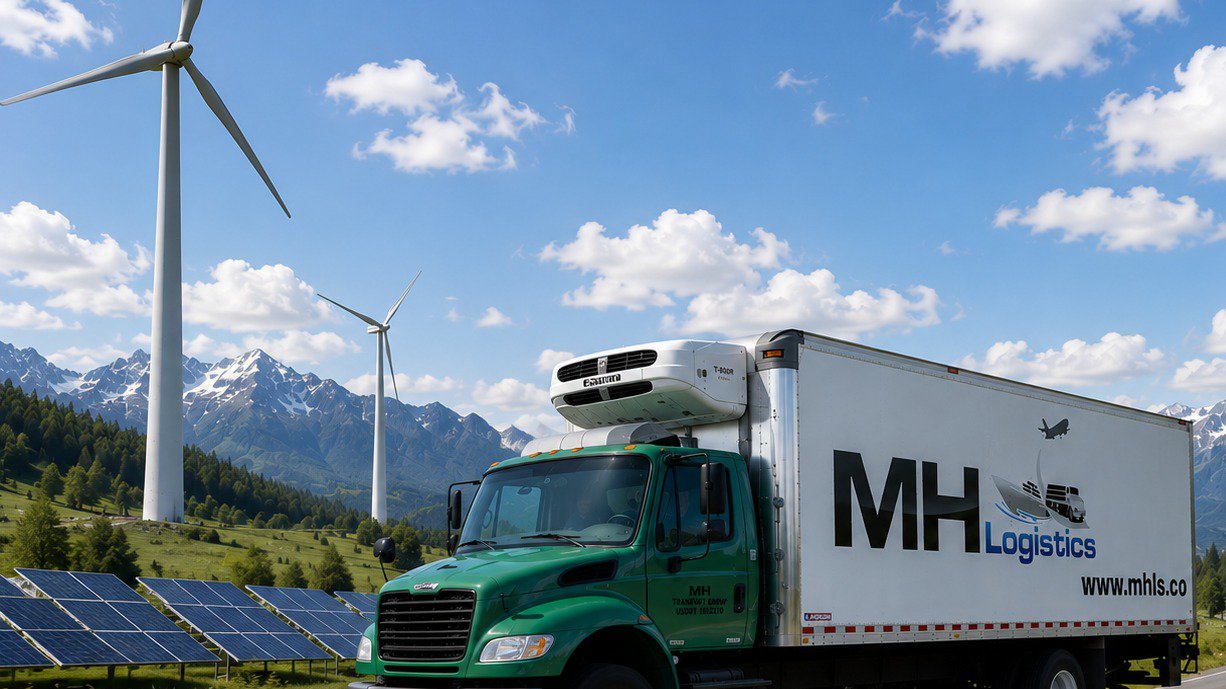


Understanding how to make cold chain supply sustainable has become a real operational priority for companies moving perishable products, not just an ESG checkbox, but a direct response to pressure from retailers, enterprise customers, and internal leadership teams.
Retailers, enterprise customers, and internal ESG initiatives are all pushing food and beverage brands to improve efficiency, reduce waste, and gain better visibility into transportation and storage operations.
The challenge is doing all of that without disrupting product quality or delivery performance.
This guide breaks down practical ways companies are making cold chain operations more sustainable while improving efficiency across the supply chain.
Refrigeration systems sit at the center of every cold chain operation, and older equipment can quietly drive up both energy costs and emissions.
Modern refrigeration technology is far more efficient than systems installed even 10 or 15 years ago. Variable speed compressors, advanced evaporators, and smart control systems allow facilities to maintain tighter temperature consistency while using less power.
Instead of running at full capacity around the clock, newer systems adjust output based on actual demand.
Many companies are replacing high-GWP refrigerants with lower-impact alternatives like CO₂ or ammonia, the UN Environment Programme estimates the food cold chain accounts for 4% of total global greenhouse gas emissions, making refrigerant choice one of the highest-impact sustainability decisions in the supply chain.
Predictive maintenance tools are becoming increasingly valuable as well. Sensors can detect inefficiencies, leaks, or performance issues before they turn into larger operational problems. That reduces downtime while helping facilities avoid excess energy consumption.
Also Read: 10 KPIs To Track With A 3PL Provider
Cold chain efficiency starts with temperature stability.
If refrigerated air constantly escapes during storage or transit, refrigeration systems work harder and energy usage climbs fast.
High-performance insulation inside warehouses, trailers, and refrigerated containers helps maintain more stable temperatures with less energy demand. Better insulation also reduces temperature fluctuations that can shorten shelf life or increase spoilage risk.
Oversized packaging wastes space and limits trailer utilization too, while weak insulation materials can create inconsistent product temperatures during transit.
Many companies are moving toward reusable insulated packaging systems and phase change materials to improve temperature retention during transportation.
These solutions help reduce spoilage while supporting sustainability goals tied to packaging waste reduction.
For perishable shippers, packaging efficiency directly impacts freight costs, product protection, and overall network performance.
Transportation emissions remain one of the largest sustainability challenges inside temperature-controlled logistics.
Longer transit times, excessive idle time, and underutilized trailers increase fuel consumption while placing additional strain on refrigeration units.
Route optimization software helps reduce those inefficiencies by identifying faster, more efficient delivery paths based on traffic patterns, weather conditions, and delivery schedules.
Load consolidation is another major opportunity.
Combining shipments strategically allows companies to maximize trailer utilization and reduce unnecessary trips.
Fewer trucks on the road means lower transportation costs and reduced emissions output.
For companies managing retailer compliance requirements, transportation optimization supports both sustainability reporting and service-level performance.
Also Read: How To Prevent Picking Errors In A Cold Storage Warehouse
Cold storage facilities operate continuously, which makes energy sourcing an important part of long-term sustainability planning.
Many temperature-controlled warehouses are investing in renewable energy systems like rooftop solar to offset operational power consumption. Others are working with utility providers that offer cleaner energy sourcing options to reduce overall emissions tied to facility operations.
Battery storage systems are becoming more common as well.
These systems help facilities manage peak demand periods more efficiently while improving operational resilience during outages or grid instability.
Energy efficiency improvements inside facilities often create immediate operational savings too.
Reducing power consumption lowers utility costs while helping companies move closer to emissions reduction targets requested by customers or corporate leadership teams.
Waste is the biggest enemy of sustainability in the cold chain.
Every rejected shipment represents wasted production costs, wasted transportation resources, and wasted storage energy.
Reducing spoilage rates has become a major focus for companies handling perishable goods.
Maintaining temperature consistency across storage, transportation, and final delivery remains one of the biggest priorities. Real-time monitoring tools make it easier to identify problems before product quality is affected.
Here’s a quick checklist to cut down waste:
For many perishable brands, knowing how to make cold chain supply sustainable starts here, reducing waste improves sustainability metrics and profit margins at the same time
Visibility has become one of the most important tools in sustainable cold chain management.
IoT sensors and real-time monitoring systems give supply chain teams constant visibility into shipment temperatures, trailer conditions, product location, and transit status.
That allows operations teams to intervene quickly if temperatures drift outside acceptable ranges.
Digitization also improves reporting capabilities.
Many shippers now need accurate emissions data and operational metrics to support sustainability reporting requirements from customers, investors, or internal ESG initiatives.
AI-driven forecasting tools also help companies align inventory levels with actual demand patterns, reducing excess inventory and lowering spoilage risk.
And warehouse management systems can also improve slotting efficiency, labor planning, and inventory rotation.
The result is a more responsive supply chain with less waste and fewer disruptions.
Warehouse design has a direct impact on energy efficiency and cold chain performance.
Modern cold storage facilities are increasingly built around energy optimization strategies.
LED lighting systems, motion sensors, insulated dock doors, and high-speed doors all help reduce unnecessary energy loss during daily operations.
Airflow design inside refrigerated facilities is another important factor. Efficient airflow distribution helps maintain stable temperatures without overworking refrigeration systems.
Some facilities are also implementing thermal energy storage systems that shift energy consumption away from peak utility periods. This helps reduce operating costs while improving overall energy efficiency.
As cold storage demand continues growing across food and pharmaceutical sectors, warehouse efficiency is becoming a major competitive advantage.
Cold chain sustainability depends heavily on the capabilities of logistics partners across the network.
Shippers increasingly expect 3PL providers to support emissions reduction initiatives, and the pressure is coming directly from the top of the retail supply chain. Walmart's Project Gigaton has engaged more than 5,900 suppliers in scope 3 emissions reductions, and similar programs from Costco and other major retailers are pushing sustainability requirements further down the supply chain every year.
That means logistics providers need strong temperature-control processes, efficient routing systems, modern warehouse infrastructure, and reliable reporting capabilities.
Partnership alignment matters more than ever.
Companies evaluating logistics providers are looking closely at technology adoption, refrigeration efficiency, transportation optimization, and operational transparency.
At MH Logistics, sustainability improvements are approached through an operational lens. The focus stays on reducing unnecessary miles, improving temperature consistency, minimizing spoilage risk, and creating more efficient cold chain workflows for perishable products.
Also Read: Do Freight Forwarders Provide Cargo Insurance?
The final step in understanding how to make cold chain supply sustainable is measurement, initiatives only work when performance is tracked against clear metrics.
Cold chain operators need clear visibility into metrics like:
Tracking KPIs allows supply chain teams to identify inefficiencies, benchmark performance, and prioritize improvements that create the biggest operational impact.
Regular audits and performance reviews also help companies stay aligned with evolving retailer requirements and internal sustainability targets.
The most effective cold chain networks treat sustainability as an ongoing operational strategy, not a one-time initiative.
Cold chain sustainability is quickly becoming part of standard supply chain expectations across the food, floral, pharmaceutical, and grocery industries.
Retailers are placing more pressure on suppliers. Enterprise customers are requesting stronger emissions reporting. Consumers expect fresher products with less waste. At the same time, transportation costs and energy costs continue rising.
That combination is pushing logistics teams to operate more efficiently across every stage.
The companies making the biggest progress are focusing on practical operational improvements.
And for logistics providers like MH Logistics, helping clients improve efficiency across temperature-controlled operations has become an increasingly important part of delivering long-term value.
For supply chain and logistics leaders working out how to make cold chain supply sustainable, the answer rarely comes from a single upgrade. It comes from a logistics partner who treats efficiency, temperature integrity, and waste reduction as one connected system.
At MH Logistics, we've spent over 15 years moving temperature-sensitive cargo for seafood importers, produce distributors, floral wholesalers, dairy suppliers, frozen food brands, and pharmaceutical companies. We approach sustainability through an operational lens: fewer unnecessary miles, tighter temperature consistency, lower spoilage risk, and cleaner data for the emissions and performance reporting your customers and leadership teams now expect.
From cold chain management and customs brokerage to air, ocean, and ground freight coordination, our team manages the full chain of custody and builds workflows around the products you actually ship.
If you're a supply chain or logistics leader ready to make your cold chain more efficient and more sustainable, contact MH Logistics or call us at 908-895-8605. Our team will show you where the biggest improvements are hiding in your network.